Hotels and Human Trafficking: What Federal Cases Show
Jul 31, 2026
Hotels and Human Trafficking: What Federal Cases Show
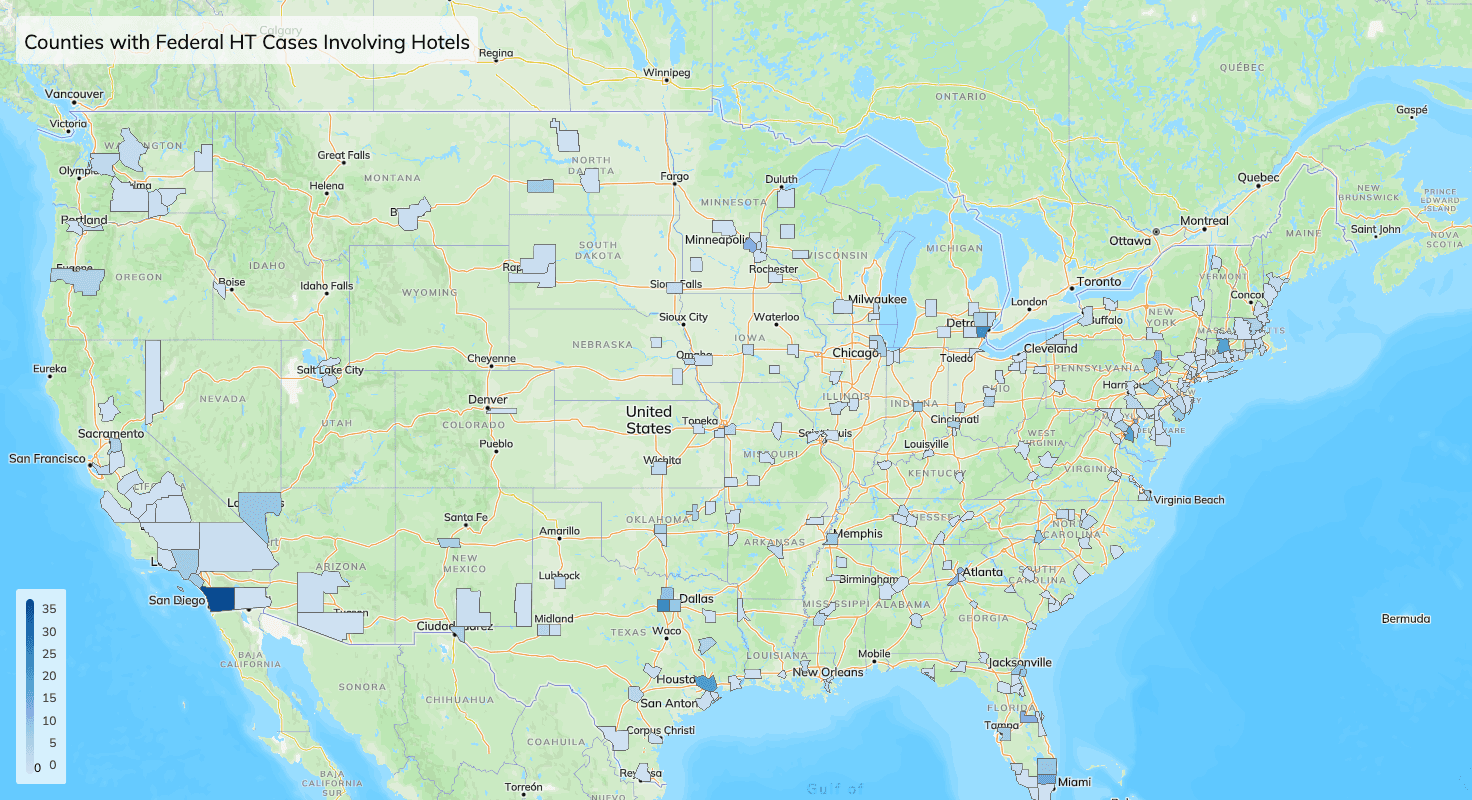
This week in Washington, our Chief Impact Officer, Dr. Vanessa Bouché, put a map of the United States on the screen in front of a room full of hotel executives. Every point on that map was a hotel or motel named as a crime location in a federally prosecuted human trafficking case. There were 1,062 of them across 2,500 cases, and almost all of them sat along interstate highways.
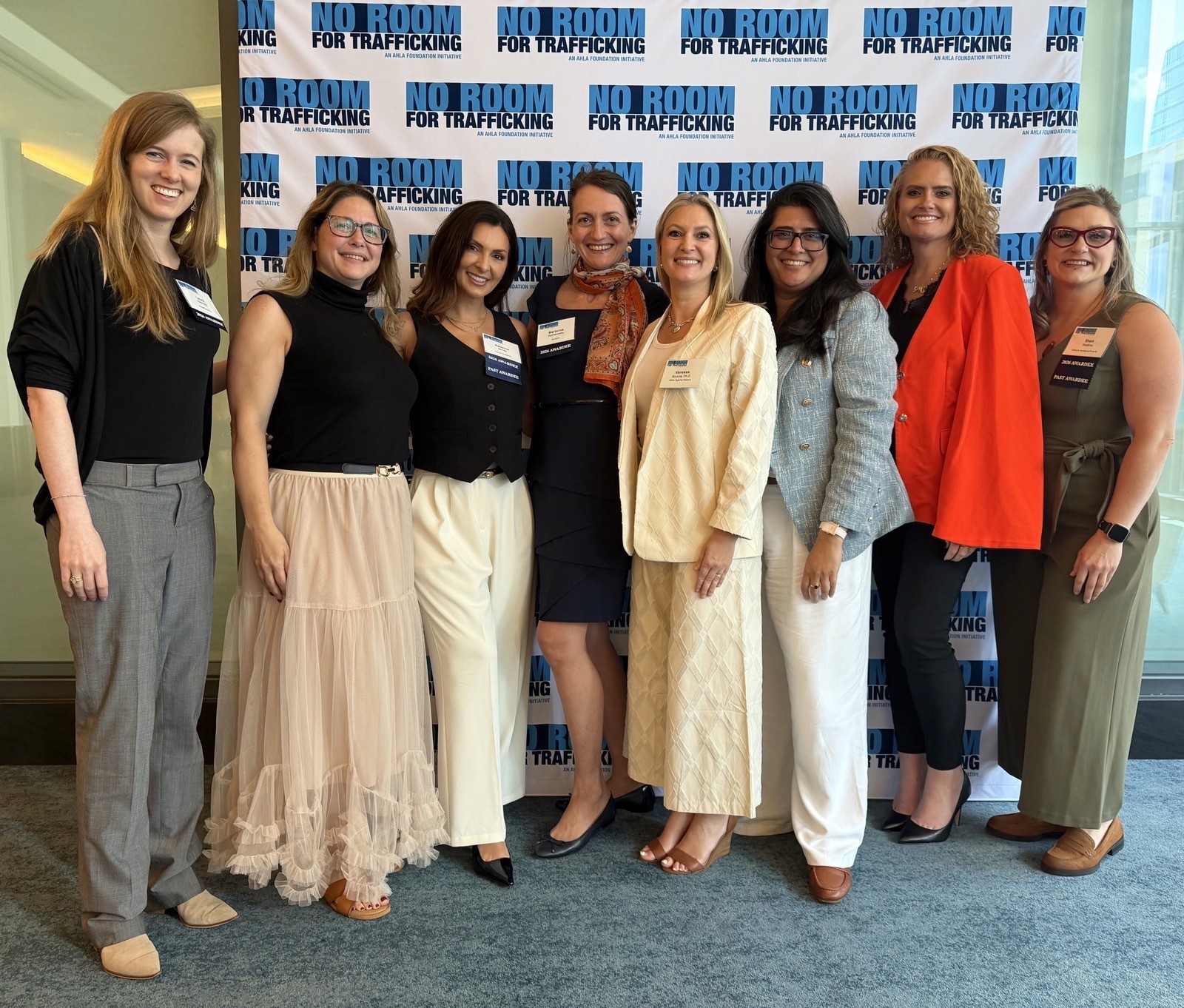
The occasion was the AHLA Foundation's No Room for Trafficking Summit, which brings together survivor advocates, hospitality leaders, and government experts every year. Allies Against Slavery was invited to take part in the Summit's first-ever Technology Showcase, and the timing was fitting, since the Summit fell on the United Nations World Day Against Trafficking in Persons.
Why the Map Matters
A single trafficking case tells you about one crime. Mapped together, they tell you where to put your attention.
"While every individual case tells an important story, together, they reveal important patterns," Dr. Bouché said. "Here we see that the vast majority of hotels named as trafficking locations in criminal cases are situated on interstate corridors, a key insight for targeted training and intervention."
That is the kind of insight a hotel brand can act on, because it points to which properties need the most intensive staff training and the strongest reporting protocols.
That corridor pattern lines up with what we see elsewhere in the data. In the National Human Trafficking Hotline data we analyzed for the 2026 State Human Trafficking Report, hotel and motel settings are the second most commonly reported sex trafficking venue in the country, with 7,165 reports.
None of this means hotels cause trafficking. Traffickers use hotels because hotels sit on highways, take cash, and offer privacy to strangers. That same reality is also why hotel staff are so often the people in a position to notice something wrong, and why the industry has spent the past decade learning to act on it.
The Industry Built the Foundation
Hotel companies have trained hundreds of thousands of employees to recognize warning signs, and they have built reporting protocols and partnerships that did not exist fifteen years ago. The AHLA Foundation announced at the Summit that its NRFT Survivor Fund has passed $10 million, with grantmaking up nearly 30 percent this year.
The next step is connecting what everyone knows separately. Courts hold one piece of the picture, service providers hold another, and screening tools and hotlines hold others still. When those pieces stay in separate systems, patterns like the interstate clustering stay invisible.
What We Brought to the Showcase
Allies Against Slavery works on the plumbing of this problem. Our Lighthouse Screening platform is used by more than 2,000 professionals at 200 frontline organizations to identify young people at risk, and it has flagged nearly 25,000 youth at clear concern for trafficking who were then connected to help. Lighthouse Data pulls court records, screening results, hotline reports, and policy data into one place so state leaders can see trends across geography and time. Our research team publishes the annual State Human Trafficking Report, and our policy team tracks 772 anti-trafficking laws passed across all 50 states.
"The next breakthrough in anti-trafficking will come from connecting trusted data, learning across organizations, and turning those insights into action," Dr. Bouché told the room. "We hope you'll join us in building the data infrastructure that makes that future possible."
That is what we came to Washington to build, and the hotel industry is a good partner for it.
Questions People Ask
How often are hotels involved in human trafficking cases?
Hotels and motels were named as crime locations 1,062 times across 2,500 federally prosecuted human trafficking cases in the federal case database maintained by Allies Against Slavery. Hotel and motel settings are also the second most reported sex trafficking venue in National Human Trafficking Hotline data, with 7,165 reports.
Where are those hotels?
Most sit along interstate highway corridors, which is why targeted training along those routes matters more than blanket approaches.
What should I do if I think I see trafficking at a hotel?
Tell hotel staff or management if it feels safe to do so, and contact the National Human Trafficking Hotline at 1-888-373-7888. Do not confront anyone directly.
Learn More
Read the 2026 State Human Trafficking Report to see the data for your state.