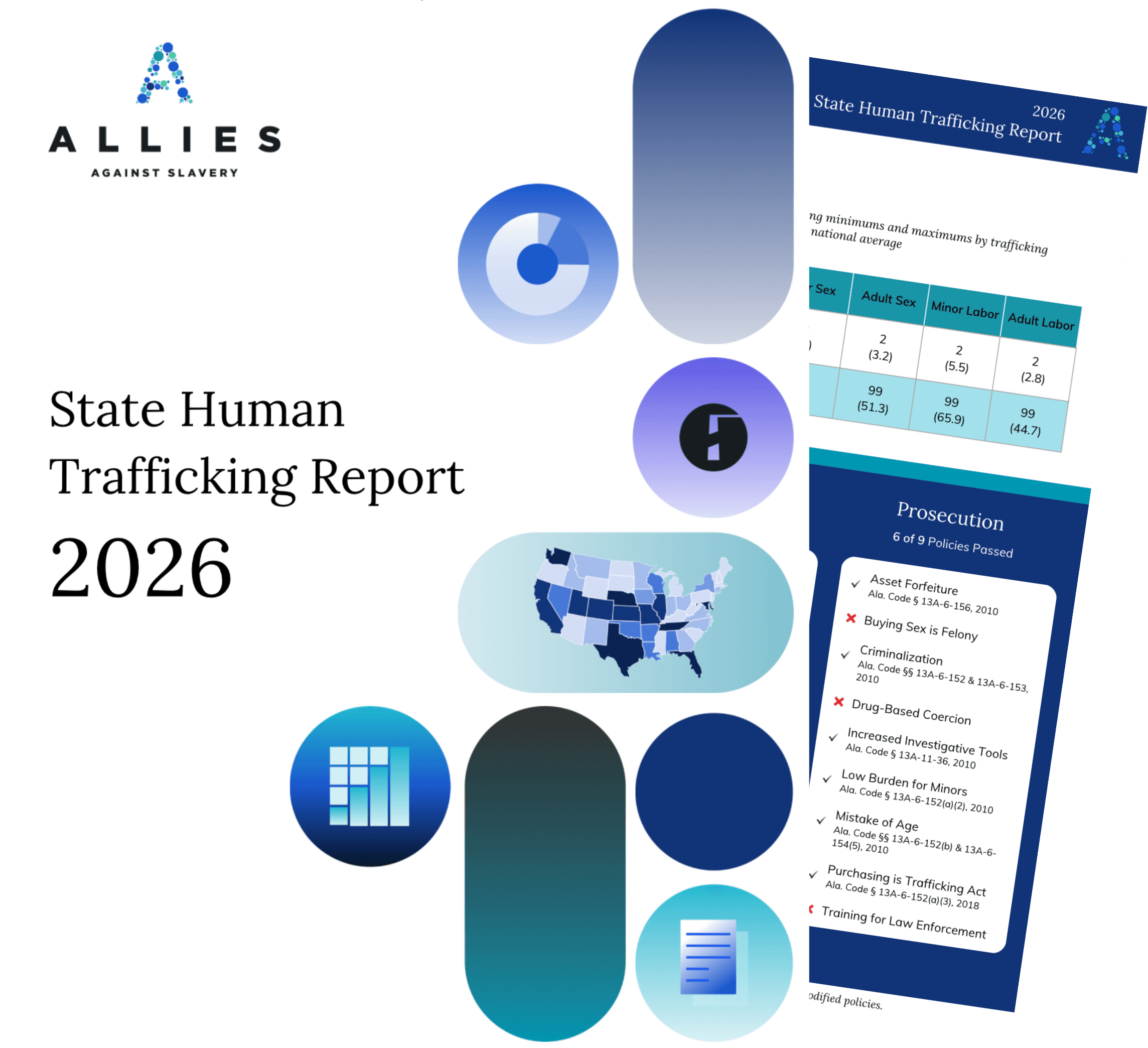
Click on a state below to view the state's human trafficking report pages:
Want to Learn More?
Watch the recording of our February 24 webinar to hear leading experts unpack key findings from the 2026 State Human Trafficking Report and learn how the data can drive smarter policy, prevention, and cross-sector action.
The 2026 State Human Trafficking Report offers a state-by-state examination of how human trafficking is addressed across the United States, drawing on five complementary datasets to illuminate both progress and persistent gaps. By integrating state policy data, federal prosecutions, hotline-reported situations, online commercial sex advertisements, and illicit massage business indicators, the report provides a multidimensional view of trafficking risk, response, and accountability from 2003 through 2024.
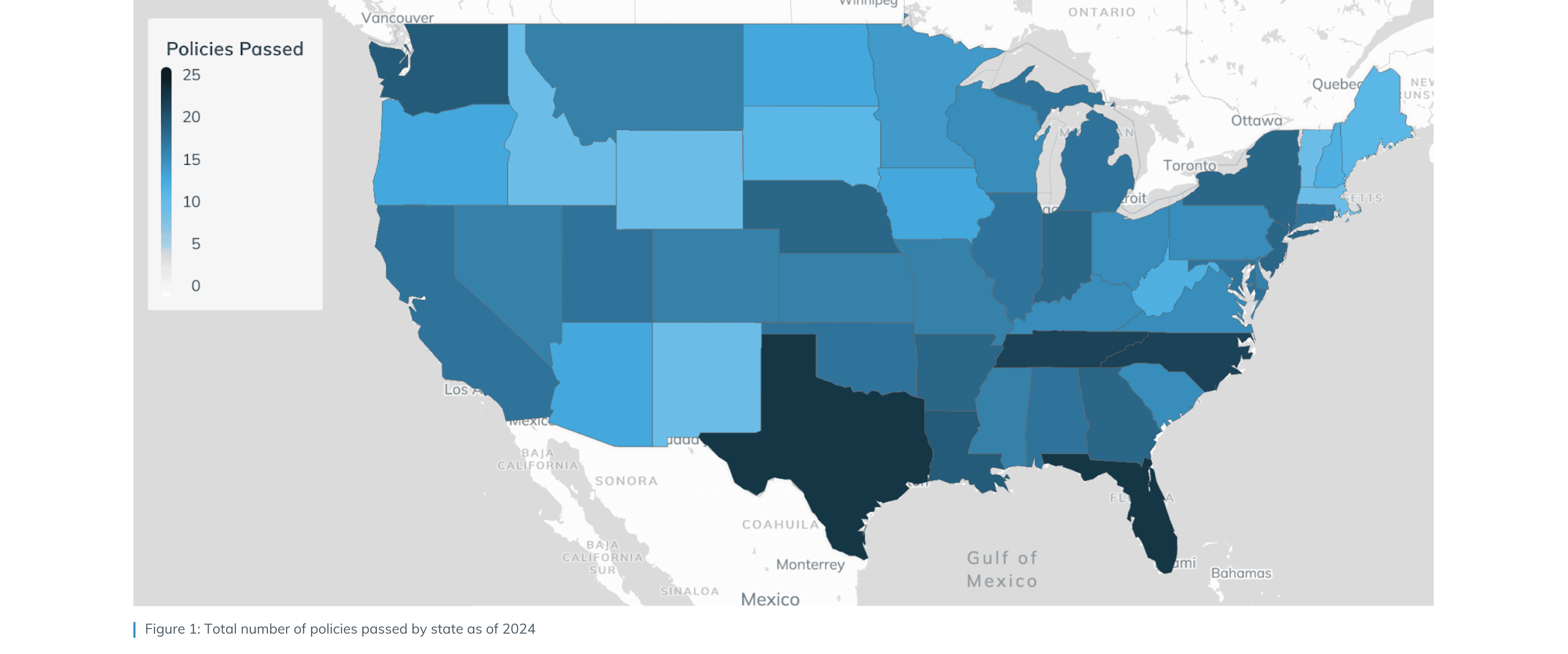
The report first analyzes state-level anti-trafficking policy adoption, tracking 25 policies across prevention, protection, and prosecution. Since 2003, states have enacted more than 770 anti-trafficking policies, reflecting sustained legislative attention to the issue. However, adoption remains highly uneven. Some states have implemented nearly all recommended policies, while others have adopted fewer than half. Across the country, prosecution and protection measures—such as criminalization, restitution, and safe harbor laws—are far more prevalent than prevention policies, which continue to lag despite their importance in reducing vulnerability before exploitation occurs.
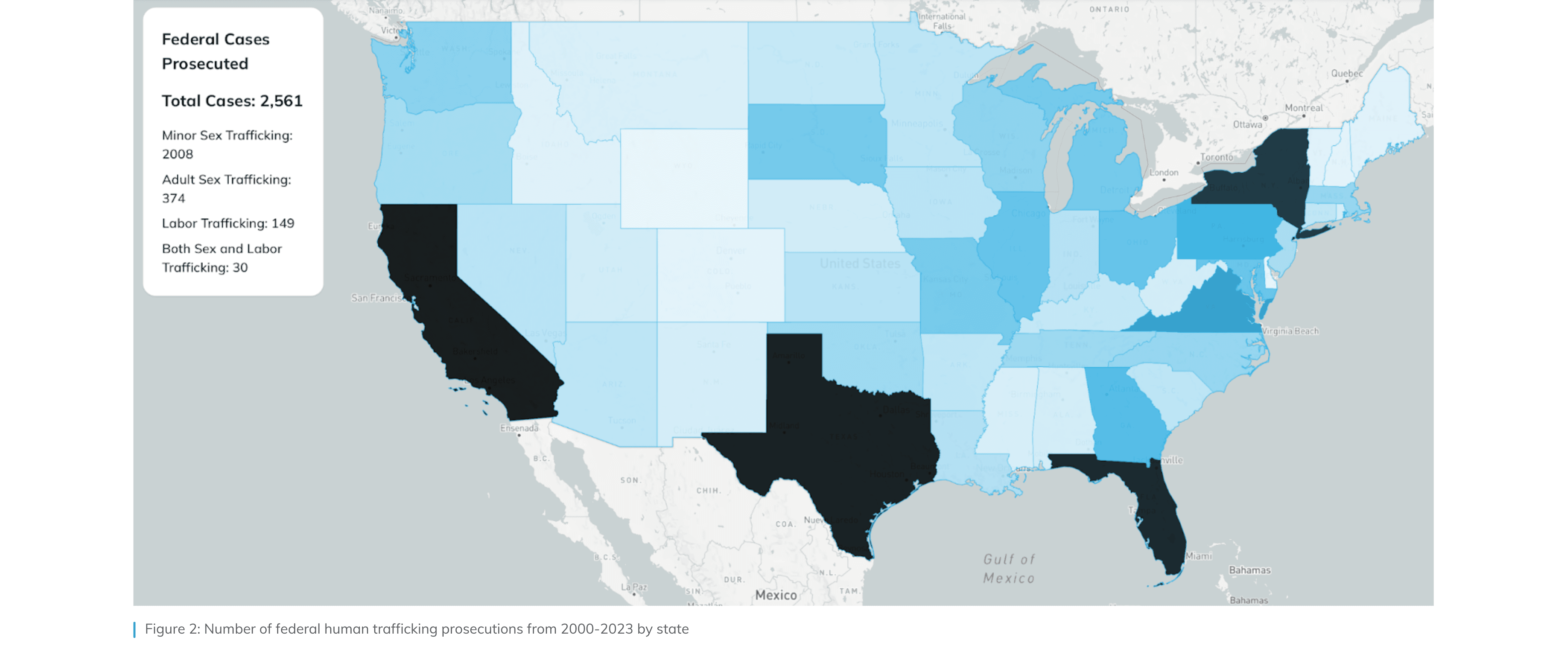
To assess enforcement, the report examines federal human trafficking prosecutions from 2000 to 2023. During this period, more than 2,500 cases were prosecuted federally, involving over 4,800 defendants and more than 12,500 identified victims. Minor sex trafficking cases dominate federal dockets, far exceeding adult sex trafficking and labor trafficking cases combined. This imbalance reflects legal standards, sentencing structures, and prosecutorial priorities rather than underlying prevalence. While populous states account for the highest number of prosecutions overall, per capita analysis reveals that smaller states lead in enforcement intensity.
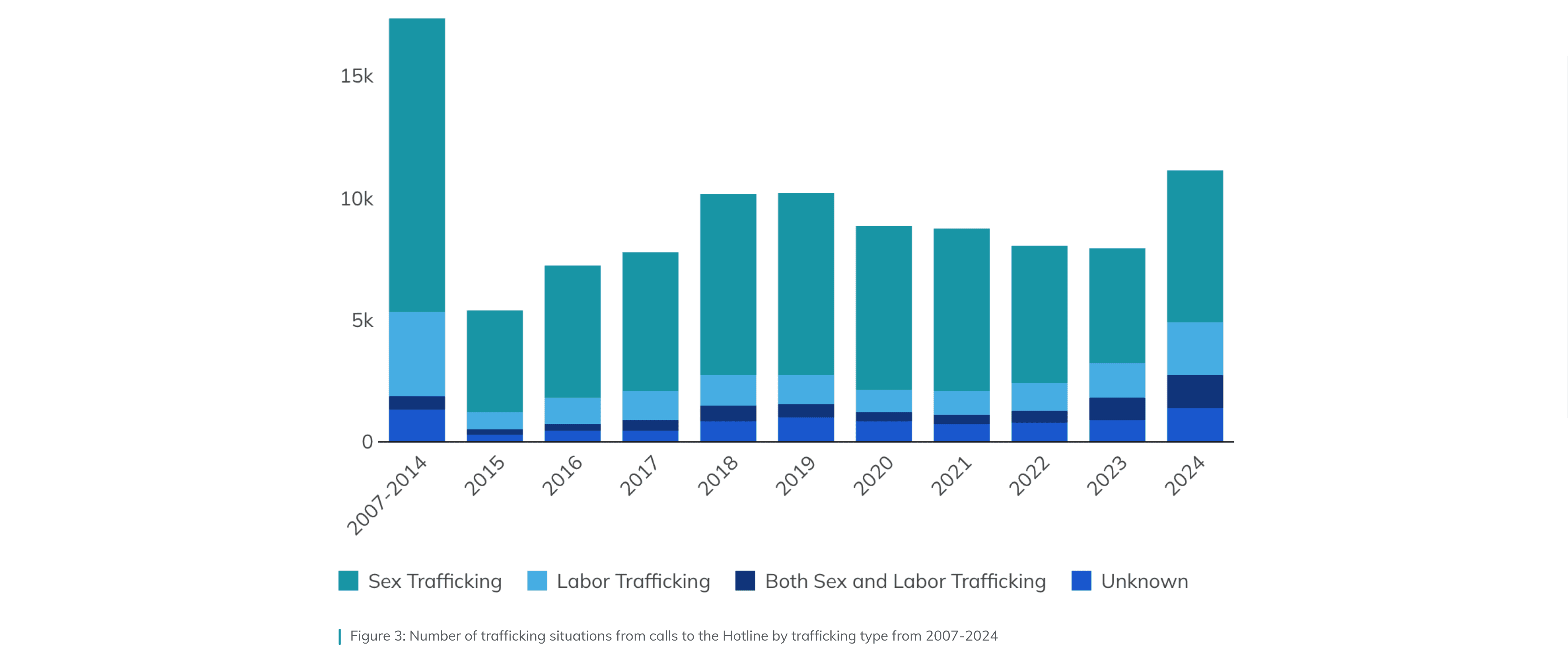
Beyond the justice system, the report incorporates National Human Trafficking Hotline data, capturing over 100,000 reported trafficking situations since 2007. This data highlight where victims, service providers, and community members are reporting concerns and seeking help. The vast majority of cases reported to the hotline involved sex trafficking. Hotline data also includes information on trafficking venues, highlighting common settings associated with both sex and labor trafficking across reported cases. For sex trafficking, the top three known venues were illicit massage spa business, hotel/motel based, and residence based commercial sex. For labor trafficking, the top three known venues were domestic work, agriculture farms, and restaurant food services.
Finally, the report integrates online commercial sex advertisements and illicit massage business (IMB) data to provide demand- and venue-based indicators of potential trafficking activity. Millions of ads and thousands of IMBs reveal geographic concentrations of commercial sex markets that often do not align with prosecution or reporting patterns, underscoring systemic gaps between suspected activity and formal responses.
Together, these findings show that while legislative and enforcement efforts have expanded, alignment across prevention, detection, and accountability remains inconsistent. The report underscores the need for stronger prevention strategies, more equitable survivor protections, and improved coordination across systems to ensure that policy intent translates into real-world impact.
Get access to Lighthouse
Partner with us on Lighthouse Data to glean even more from your state's data sources.