
This publication provides one of the most comprehensive analyses of how human trafficking policies have evolved across the United States over the past two decades. Drawing on a newly compiled dataset of 710 pieces of legislation passed across all 50 states between 2003 and 2023, the study examines how anti-trafficking policies develop, spread, and change over time. The research applies two major public policy frameworks—punctuated equilibrium theory and policy diffusion—to better understand how federal and state laws interact and influence one another.
At the center of the analysis is the concept of “punctuated diffusion,” which describes how major policy changes create bursts of legislative activity that then spread across jurisdictions. In the case of human trafficking, the passage of the Trafficking Victims Protection Act (TVPA) in 2000 served as a major policy turning point. The law established a comprehensive federal framework for combating trafficking based on the “3Ps”: prevention, protection, and prosecution. Following its passage—and subsequent reauthorizations—states began rapidly adopting their own anti-trafficking laws, often modeled on federal provisions.
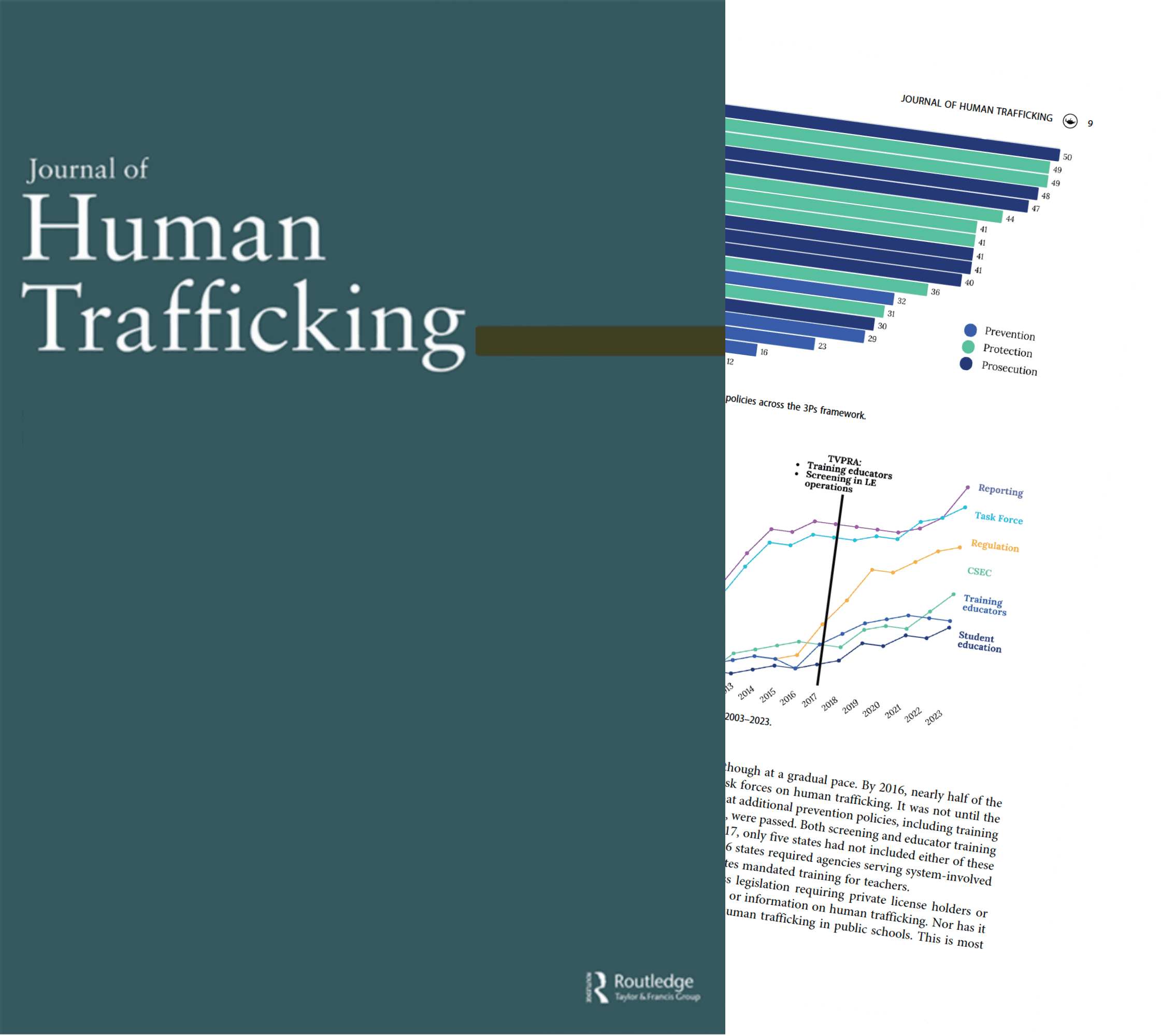
Using a detailed policy scan approach, the study tracks 27 policy indicators across prevention, protection, and prosecution categories. The findings show that prosecution policies have spread most quickly and widely across the country. Criminalization of trafficking, asset forfeiture laws, and reduced burdens of proof in cases involving minors were adopted by most states within a relatively short time after federal legislation. Protection policies, such as victim restitution, civil remedies, and survivor assistance, also diffused broadly across states over time.
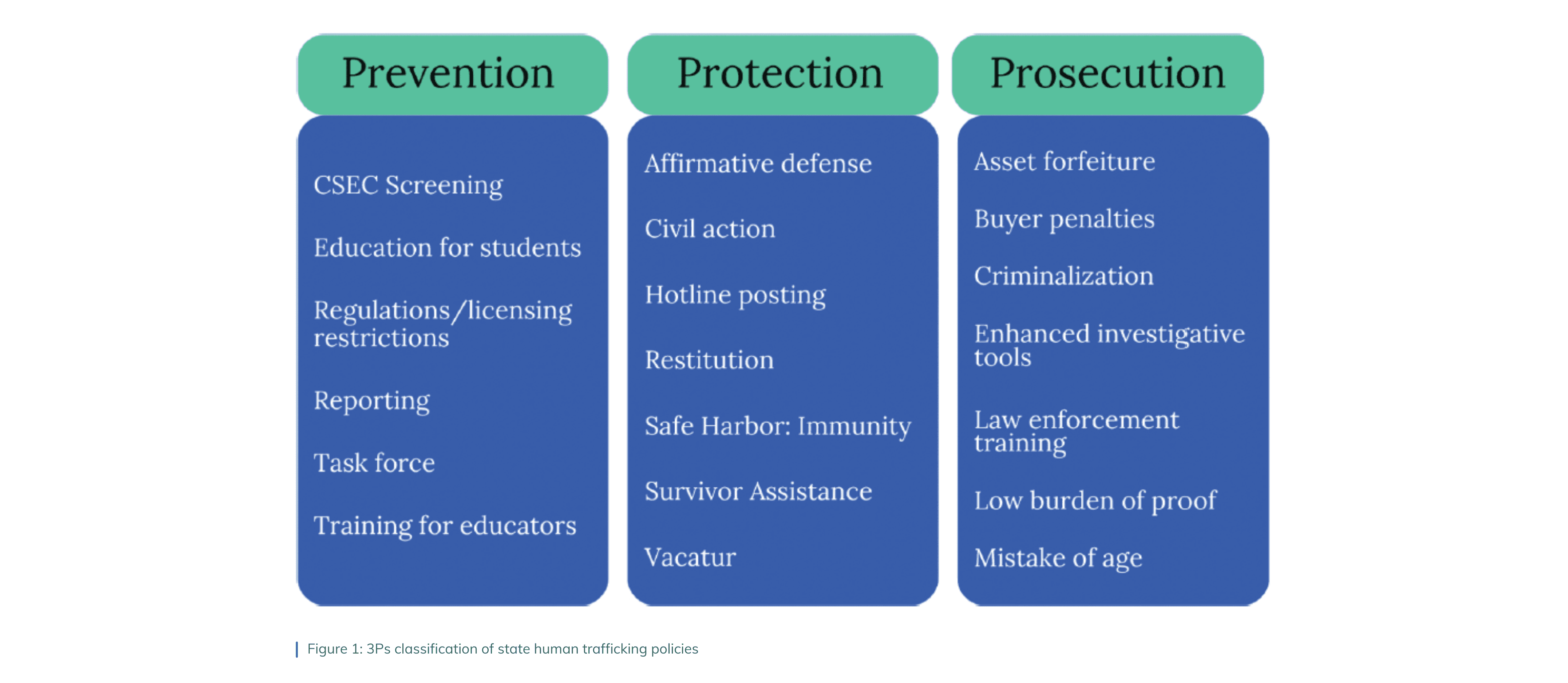
In contrast, prevention policies lag significantly behind. Fewer states have adopted measures such as school-based education programs, screening tools for vulnerable youth, or training requirements for educators. This imbalance reflects a broader tendency for anti-trafficking efforts to prioritize criminal justice responses over prevention strategies that address root causes of exploitation.
The research also highlights the dynamic relationship between federal and state policymaking. While some policies originate at the federal level and diffuse downward to states, others emerge first in state legislation before influencing federal law. In several cases, states pioneered policy innovations—such as certain investigative tools or legal protections—that were later incorporated into federal legislation.
Ultimately, the study provides a roadmap for understanding how anti-trafficking policies evolve and spread within a federal system. By documenting where policies have expanded—and where gaps remain—it offers valuable insights for policymakers, advocates, and researchers seeking to strengthen prevention, improve protections for survivors, and develop more balanced responses to human trafficking in the United States.
Explore our public insights
View the trends outlined in this publication and more on our public insights website. This platform gives you a taste of the data available on Lighthouse.