In A Collaborative Approach to Building a Human Trafficking Data Ecosystem: A Blueprint for Shared Governance, Technology, and Terminology, published in Harvard Data Science Review (Winter 2026), the authors confront a central paradox in the anti-trafficking field: despite growing awareness and legislation, the data landscape remains fragmented, inconsistent, and underdeveloped.
The article argues that meaningful progress against human trafficking requires more than isolated reports, dashboards, or academic studies. Instead, it calls for a coordinated Human Trafficking (HT) Data Ecosystem built on three interconnected pillars: a data trust, a data hub, and a data taxonomy.
First, the authors propose establishing a data trust—a formal governance structure that defines who can access, use, and share trafficking-related data, and under what conditions. Grounded in ethical principles such as survivor-centered protections, confidentiality, data minimization, and equitable access, the data trust model is designed to overcome longstanding barriers to collaboration, including legal ambiguity and concerns about misuse.
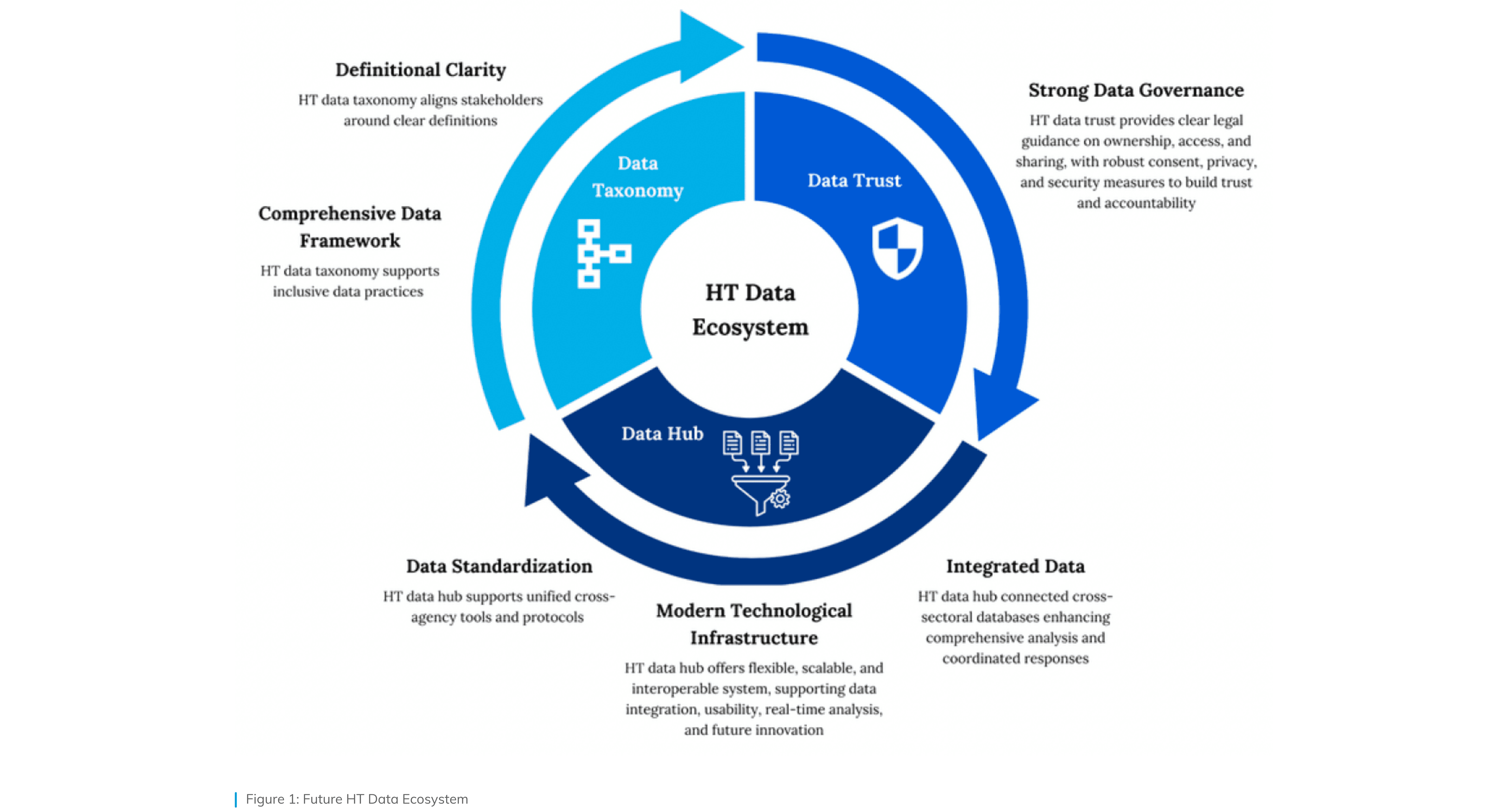
Second, the article presents Lighthouse, developed by Allies Against Slavery, as a model data hub. Lighthouse integrates 11 trafficking-related datasets from 24 unique data sources, spanning federal prosecutions, state policies, screening data, online commercial sex advertisements, law enforcement records, and service provision data. Built on a modern cloud-based infrastructure, the platform supports secure ingestion, standardization, analysis, and visualization of disparate datasets. The authors outline an optimized hybrid ETL/ELT architecture that separates transactional storage from analytical processing, enabling scalable, evergreen, and interactive insights.
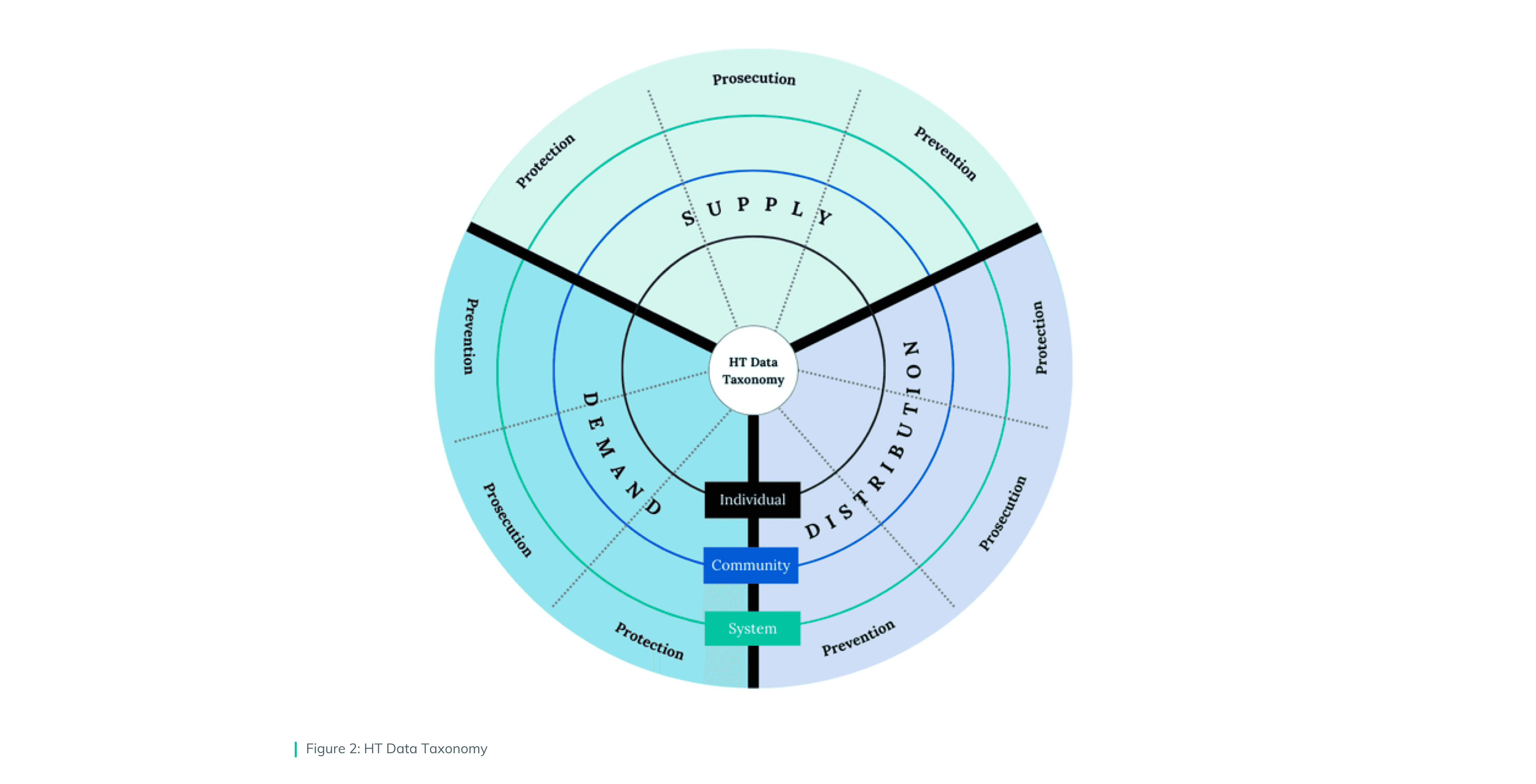
Third, the article introduces a comprehensive HT data taxonomy that organizes data across two intersecting frameworks: the “condition model” (supply, demand, distribution) and the “intervention model” (prevention, protection, prosecution), overlaid with the social-ecological model. This taxonomy clarifies definitions, exposes data gaps, and guides strategic expansion of datasets. To further strengthen rigor, the authors develop a quantitative scoring system evaluating each dataset’s reliability, validity, and coverage—then normalize category scores to produce a diagnostic heat map of strengths and weaknesses across the ecosystem.
The article concludes that the absence of coordinated governance and modern infrastructure is not a feasibility problem, but a design problem. By integrating shared governance, advanced technology, and standardized terminology, the proposed HT Data Ecosystem offers a replicable, survivor-centered model capable of transforming fragmented information into actionable intelligence. In doing so, it provides a pathway toward stronger policy, more targeted interventions, and systemic change in the fight against human trafficking.
Explore our public insights
View the trends outlined in this publication and more on our public insights website. This platform gives you a taste of the data available on Lighthouse.