What 2,390 Federal Cases Reveal About Human Trafficking Prosecution in America
Mar 6, 2025
In 2000, the federal government passed the Trafficking Victims Protection Act. It was the first legislation to address peonage and slavery since the Civil War. For the first time, human trafficking became a stand-alone federal offense.
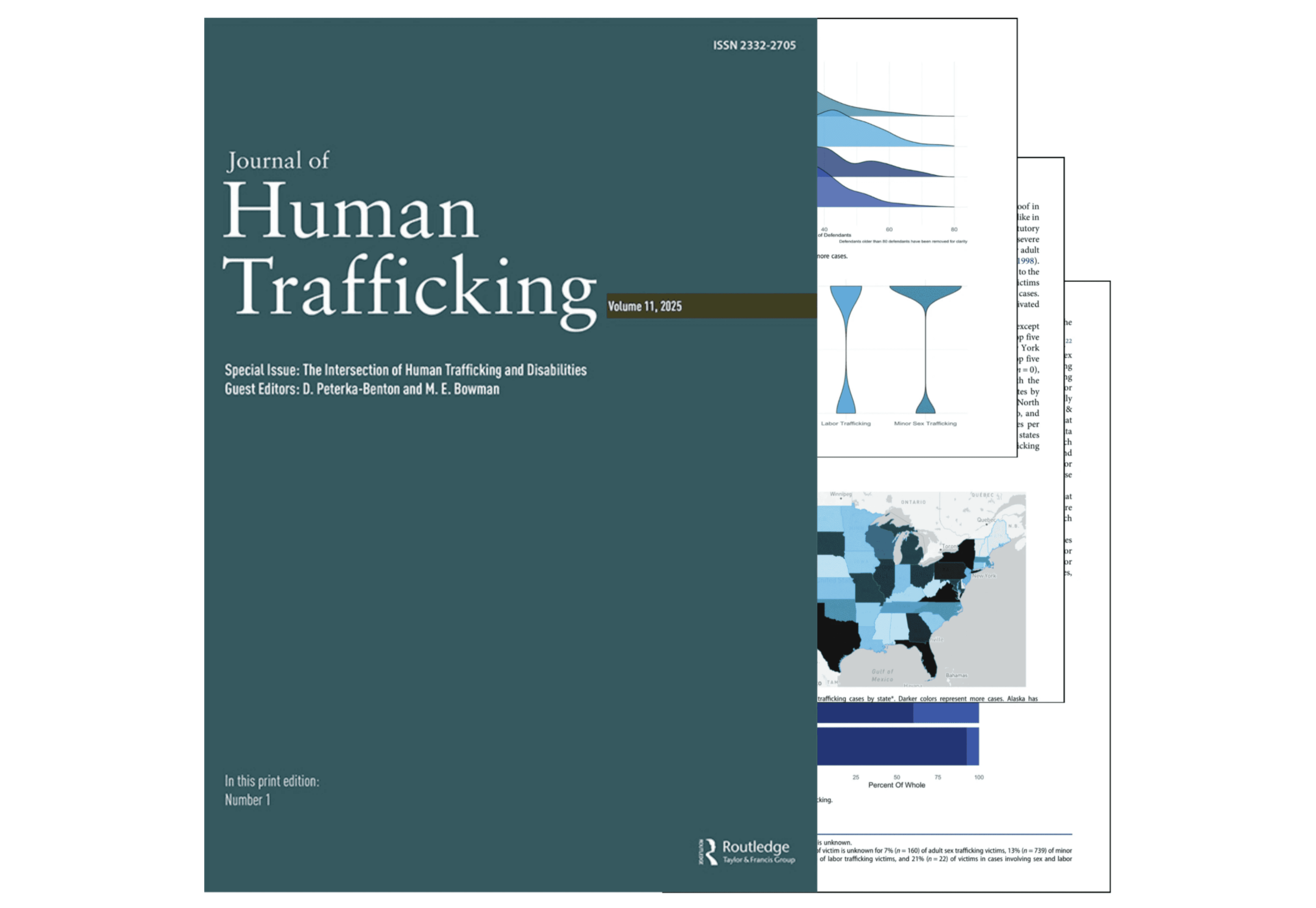
Twenty-two years of prosecutions followed. Yet until now, no comprehensive peer-reviewed study had examined the patterns in those cases. A new study published in the Journal of Human Trafficking, led by Dr. Vanessa Bouché in partnership with Allies Against Slavery, changes that.
Using Allies Against Slavery's Lighthouse data platform, researchers collected, coded, and analyzed every federally prosecuted human trafficking case from 2000 to 2022. The result is the Federal Case Database — 2,390 cases, 4,584 defendants, and 12,132 identified victims. Together, these numbers tell a story that should reshape how we think about prosecution, prevention, and justice.
How Many Federal Human Trafficking Cases Have Been Prosecuted?
From 2000 to 2022, the federal government prosecuted 2,390 human trafficking cases across the United States. Every state except Wyoming prosecuted at least one case.
The five states with the most cases were California (222), Florida (215), Texas (206), New York (184), and Virginia (105). These largely reflect the most populous states. But when adjusted for population, a different picture emerges. South Dakota, North Dakota, Alaska, Virginia, and Rhode Island led the nation in cases per capita.
Prosecutions grew steadily over this period. Grouped by five-year windows, the number of cases rose by an average of 252% per period. Several factors explain this growth: increased awareness among prosecutors, expanded legal definitions of trafficking, and harsher penalties that incentivized charging under trafficking statutes.
Sex Trafficking Cases Dominate Federal Prosecutions
The most striking finding is the imbalance in what gets prosecuted.
Of all cases, 78% involved minor sex trafficking. Another 14% involved adult sex trafficking. Just 5% were labor trafficking cases. And only 1% involved both sex and labor trafficking.
This disparity has grown over time. From 2000 to 2011, labor trafficking made up 15% of all cases. From 2012 to 2022, it dropped to just 4%.
Why the decline? Several factors are at play. Minor sex trafficking cases carry a lower burden of proof — prosecutors do not need to prove force, fraud, or coercion when minors are involved. The penalties are also the most severe. And public sympathy tends to focus on minor victims, which can influence prosecutorial priorities.
Fewer Cases, Fewer Victims Recovered
The focus on minor sex trafficking comes with a tradeoff.
Minor sex trafficking cases involve an average of just 3 victims per case. Adult sex trafficking cases average 6. Labor trafficking cases average 28 victims per case.
Across all cases, 72% of the 12,132 identified victims were adults. Yet 78% of prosecuted cases focused on minors. This means the case types pursued least often — labor trafficking and adult sex trafficking — tend to recover the most victims.
Put another way: a greater emphasis on labor trafficking enforcement could lead to identifying and protecting significantly more people.
Racial Disparities Raise Difficult Questions
The data on defendants reveals patterns that demand attention.
Overall, 46% of defendants across all cases are Black, 20% are White, 16% are Hispanic, and 6% are Asian. Black individuals make up just 14.4% of the U.S. population. In minor sex trafficking cases specifically, Black defendants account for 53%.
These are the very cases with the lowest burden of proof and the highest sentencing guidelines. The researchers note that this pattern may reflect broader racial bias in the criminal justice system — and may also mean that traffickers of other racial backgrounds are going unidentified because they do not match expected profiles.
This is not a simple story. The data also shows that 24% of all defendants are female, and that labor trafficking cases are more gender-balanced than sex trafficking cases. The conditions under which women become defendants in sex trafficking cases deserve further scrutiny, especially given the well-documented overlap between victims and offenders.
What This Means for the Field
This research, housed within Allies Against Slavery's Lighthouse platform, fills a critical gap. For two decades, scholars have called for more empirical rigor in anti-trafficking research. This dataset provides the foundation.
The findings point toward several areas for reform. First, the dramatic underrepresentation of labor trafficking in federal prosecutions warrants a reexamination of priorities. Second, the racial disparities in who gets prosecuted — and under what evidentiary standards — demand honest conversation. Third, the data suggests that the cases most frequently pursued are also the simplest to investigate, with fewer victims and fewer defendants. Larger, more organized trafficking operations may be going unaddressed.
Allies Against Slavery continues to expand this dataset and integrate it with other data sources within Lighthouse Data to build a more comprehensive picture of trafficking across the country. The goal is not just to track what has happened, but to equip policymakers, prosecutors, and advocates with the evidence they need to act differently.
Data alone does not change systems. But when we bring people and data together, we can see what was invisible — and begin to build something better.
Frequently Asked Questions
How many federal human trafficking cases have been prosecuted in the United States?
From 2000 to 2022, the federal government prosecuted 2,390 human trafficking cases involving 4,584 defendants and 12,132 identified victims, according to Allies Against Slavery's Federal Case Database housed in the Lighthouse data platform.
What type of trafficking is most commonly prosecuted at the federal level?
Minor sex trafficking accounts for 78% of all federally prosecuted human trafficking cases. Labor trafficking represents just 5% of cases, despite labor trafficking cases involving an average of 28 victims per case compared to 3 in minor sex trafficking cases.
Which states have the most federal human trafficking prosecutions?
California (222), Florida (215), Texas (206), New York (184), and Virginia (105) lead in total case volume. When adjusted for population, South Dakota, North Dakota, Alaska, Virginia, and Rhode Island have the highest prosecution rates.
Where can I explore federal trafficking prosecution data?
Portions of the data are publicly available through the Allies Against Slavery data explorer at alliesagainstslavery.org. Partners and researchers can request access to the full Lighthouse Data platform.
Explore the Data
Access federal prosecution trends and state-level trafficking data through our interactive data explorer