Over Half of Women Charged in Federal Sex Trafficking Cases Are Victims: What Data Reveals
Jan 21, 2025
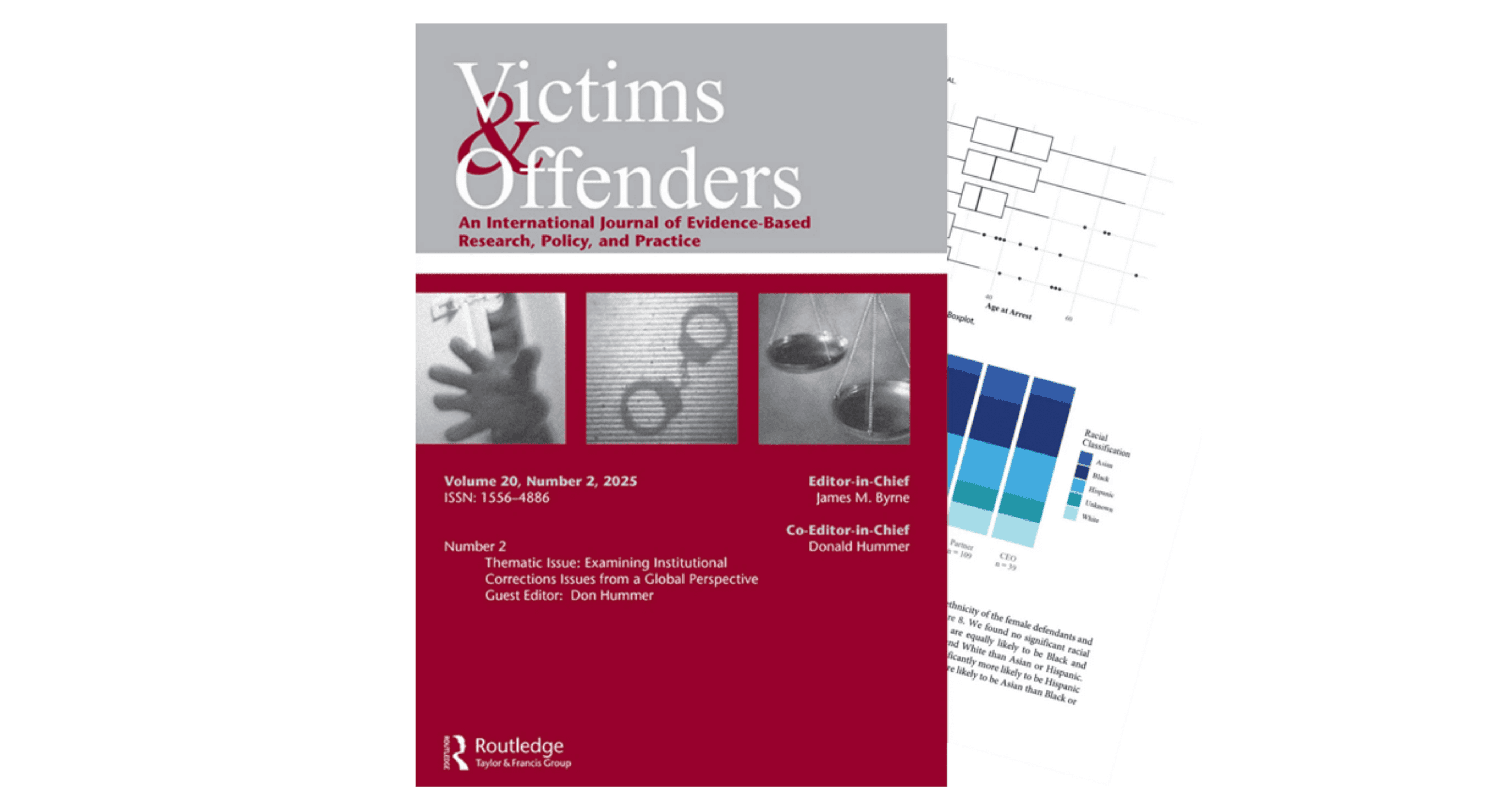
More than half of the women indicted in federal sex trafficking prosecutions are themselves victims of trafficking. That is the central finding of a new peer-reviewed study published in Victims & Offenders and powered by Allies Against Slavery's Lighthouse data platform.
The study analyzed 399 female defendants across more than 1,571 federal sex trafficking cases from 2000 to 2022. Using a new analytical framework called the T.R.A.P. Typology, researchers found that 54% of these women showed clear indicators of being trafficking victims — not offenders. They were being prosecuted for crimes they were forced to commit.
This research represents one of the most comprehensive empirical examinations of the victim-offender overlap in sex trafficking cases to date. And it has urgent implications for how our criminal justice system investigates, prosecutes, and sentences women in these cases.
The Problem: Victims Are Being Prosecuted as Criminals
For more than two decades, women who are victims of sex trafficking have been charged alongside — or instead of — their traffickers. These women are often forced by their traffickers to recruit other victims, post advertisements, manage money, and carry out day-to-day operations. When law enforcement investigates these cases, the women's involvement in criminal activity can overshadow their victimization.
The reasons are complex. For nearly a century, the dominant policing approach to prostitution was to arrest the people engaged in it. Even after the federal Trafficking Victims Protection Act of 2000 redefined sex trafficking as a crime of force, fraud, or coercion, old enforcement patterns persisted. The line between trafficking victim and prostitution offender remained blurred.
Compounding this, many trafficking victims do not self-identify as victims. Psychological coercion and trauma bonding often prevent them from recognizing or disclosing their exploitation. When they refuse to cooperate with investigations, law enforcement's options narrow — and arrest often follows.
The result is a system in which the very people it should protect are being punished instead.
A New Framework: The T.R.A.P. Typology
To bring clarity to this problem, the research team developed the T.R.A.P. Typology — a systematic framework for classifying women in sex trafficking cases. The acronym stands for four dimensions used to evaluate each defendant: whether she had a Trafficker controlling her, whether she Recruited other victims, whether she performed Administrative tasks for the organization, and whether she engaged in Prostitution.
Using data from Allies Against Slavery's Lighthouse data platform, researchers examined federal case documents — indictments, complaints, sentencing memos, and news articles — to classify each woman across these four dimensions.
The typology yields five categories: managers, bottoms, associates, partners, and CEOs.
Managers and bottoms are classified as victims. Both operated under the control of a trafficker and were forced into prostitution. The difference between them is one of degree: bottoms typically held more responsibility within the organization, often because they had been under their trafficker's control for a longer period. Associates, partners, and CEOs are classified as offenders. They showed no indicators of operating under a trafficker's control or engaging in prostitution themselves.
This framework matters because it provides a consistent, evidence-based way to distinguish victims from offenders in cases where the line has historically been unclear.
What the Data Shows
The findings are striking. Of 399 female defendants analyzed, 14% were managers, 39% were bottoms, 10% were associates, 27% were partners, and 10% were CEOs. When managers and bottoms are combined, 54% of all women charged in federal sex trafficking cases are victims of trafficking.
That rate has not improved over time. The researchers found no decrease in the proportion of victims being prosecuted from 2000 to 2020, despite increased training and awareness among law enforcement and prosecutors.
Significant demographic patterns emerged as well. Victims tend to be younger, with managers averaging 26 years old and bottoms averaging 25. Offenders are older, with associates, partners, and CEOs averaging 35 to 36. The strongest predictor of victim status is age: women under 25 are far more likely to be trafficking victims who were forced into criminal activity.
Racial patterns also surfaced. Victims — the managers and bottoms — are more likely to be Black or white. Offenders are more likely to be Asian or Hispanic, which reflects differences in the types of trafficking organizations involved. Victims are disproportionately found in organizations that traffick American women through online and street-based solicitation, while offenders are more common in brothel-based operations involving foreign national victims.
The Human Cost
Behind these numbers are real consequences. The data shows that 79% of the women classified as victim-offenders served prison time, collectively totaling 430 years of incarceration. Sixty percent accepted plea deals — agreements that often require waiving the right to appeal.
Incarceration carries long-term effects that extend far beyond the sentence itself: complex post-traumatic stress disorder, cycles of re-arrest, destruction of family relationships, and intergenerational trauma. For women who were already victims of trafficking, prison deepens the harm rather than addressing it.
This disproportionately impacts Black and white women, further entrenching a system where Black women in particular face incarceration as a consequence of their own exploitation.
Why This Research Matters for the Field
This study advances the anti-trafficking field in several concrete ways.
First, the T.R.A.P. Typology gives law enforcement and prosecutors a practical tool. It can be incorporated into training programs to help investigators recognize when a suspect may actually be a victim. It can guide how professionals approach interviews and build cases. And it can help juries understand the dynamics of forced criminality when trafficking victims testify in trials.
Second, the research underscores the need for victim-centered investigation models. The Department of Homeland Security's Center for Countering Human Trafficking has begun partnering with service providers at the start of investigations — before any arrests are made. In these models, victims are offered services and are never arrested. This approach should be scaled nationwide.
Third, the findings support the case for legal reforms that create pathways to expungement, vacatur, and clemency for trafficking survivors whose criminal records stem from their exploitation. The federal Trafficking Survivors Relief Act would be a significant step forward, providing a mechanism for survivors to clear records directly tied to their trafficking experience. Yet even with such legislation, the process remains costly and difficult for many survivors to navigate.
How Allies Against Slavery's Data Made This Possible
This research was built on a foundation of data. Allies Against Slavery's Lighthouse data platform houses one of the most comprehensive collections of federal human trafficking prosecution data in the country — spanning more than 1,571 cases, 3,326 defendants, and approximately 75 coded variables per case.
For this study, researchers used Lighthouse data to identify female defendants, access case documents, and code each woman across the T.R.A.P. dimensions. The dataset's depth and breadth made it possible to move beyond anecdotal evidence and establish statistically significant patterns for the first time.
This is what data-driven anti-trafficking work looks like in practice. When we invest in building shared data infrastructure, we can answer questions the field has struggled with for decades — and those answers can change policy, reshape training, and ultimately protect survivors.
What Comes Next
The study opens several avenues for future research. Examining the specific charges, conviction rates, and sentencing outcomes across the five typology categories would deepen our understanding of how the justice system treats victims versus offenders. Exploring the intersection of race, trafficking type, and organizational structure could reveal even more nuanced patterns. And expanding this analysis to state-level prosecutions — where the vast majority of trafficking cases are handled — could multiply its impact.
Together, we are building the evidence base that our justice system needs to get this right. The women in these cases deserve a response that recognizes the full truth of their experience — not one that punishes them for crimes they were forced to commit.
Frequently Asked Questions
How many women in federal sex trafficking cases are actually victims?
According to a peer-reviewed study published in Victims & Offenders and powered by Allies Against Slavery's Lighthouse data platform, 54% of female defendants in federal sex trafficking prosecutions from 2000 to 2022 showed clear indicators of being trafficking victims. The study analyzed 399 female defendants using the T.R.A.P. Typology framework.
What is the T.R.A.P. Typology?
The T.R.A.P. Typology is a research framework developed to classify female defendants in sex trafficking cases. It evaluates four dimensions: whether a woman had a Trafficker controlling her, whether she Recruited victims, whether she performed Administrative tasks, and whether she engaged in Prostitution. The typology produces five categories — manager, bottom, associate, partner, and CEO — and distinguishes victims from offenders based on evidence of trafficking control.
What predicts whether a woman in a sex trafficking case is a victim or an offender?
The strongest predictors are age and the nationality of the victims in the case. Women under 25 are significantly more likely to be trafficking victims who were forced into criminal activity. Cases involving American victims and online or street-based solicitation are also more likely to involve victim-defendants, according to the study's analysis of Allies Against Slavery's federal prosecution data.
Why are trafficking victims still being prosecuted?
Multiple factors contribute. Historical policing approaches treated prostitution as a crime without distinguishing forced involvement. Many victims do not self-identify due to psychological coercion and trauma bonding. And when victims refuse to cooperate with investigations, law enforcement options become limited. The study found no decrease in the rate of victim prosecutions from 2000 to 2020.
Where can I access the data behind this research?
The federal prosecution data used in this study is housed in Allies Against Slavery's Lighthouse data platform. Portions of the data are publicly accessible through the Allies Insights data explorer at alliesagainstslavery.org. Researchers and partners can request access to the full dataset by contacting Allies Against Slavery directly.
Data Drives Justice
Explore the Lighthouse data platform and see how Allies Against Slavery is turning evidence into action